Piedmont Dental  ·  Dental Bridges

Dental Bridges

A bridge closes the space a missing tooth leaves behind: a custom replacement tooth anchored to crowns on its neighbors, cemented in place so it never comes out. Dr. Ben Areheart has been placing bridges at this Rock Hill office since 2014, and you'll have the full plan and the cost in hand before any work begins.

Book your appointment

Step 1 of 3

This field is for validation purposes and should be left unchanged.

Prefer to talk? Call (803) 328-3886.

★★★★★5.0 from 400+ patientsOr call (803) 328-3886
A three unit porcelain dental bridge at Piedmont Dental in Rock Hill
Which bridge fits your gap

Four bridge designs, one right fit

Gaps come in different shapes, and so do bridges. Dr. Areheart looks at the space, the teeth around it, and your bite, then tells you plainly which of these he'd choose and why.

Traditional Bridge

The workhorse. The teeth on either side of the gap each get a crown, and the replacement tooth is fused between them as one solid piece. A natural fit when those neighbors could use crowns anyway.

How our crown work is done →

Cantilever Bridge

Anchors to a tooth on just one side of the gap. Useful when there's nothing sound on the other side, though it's chosen carefully because that single anchor carries the whole chewing load.

Maryland Bridge

A replacement tooth held by thin wings bonded to the backs of the neighboring teeth. Very little drilling involved, which makes it a conservative option for a missing front tooth.

Implant-Supported Bridge

For longer gaps, implants can carry a row of replacement teeth without touching your natural ones at all. The sturdiest option when several teeth in a row are gone.

About dental implants →
Dread the dental chair?

IV sedation is available right here in our office, something few general practices around Rock Hill can say. You relax through the appointment while the work gets done.

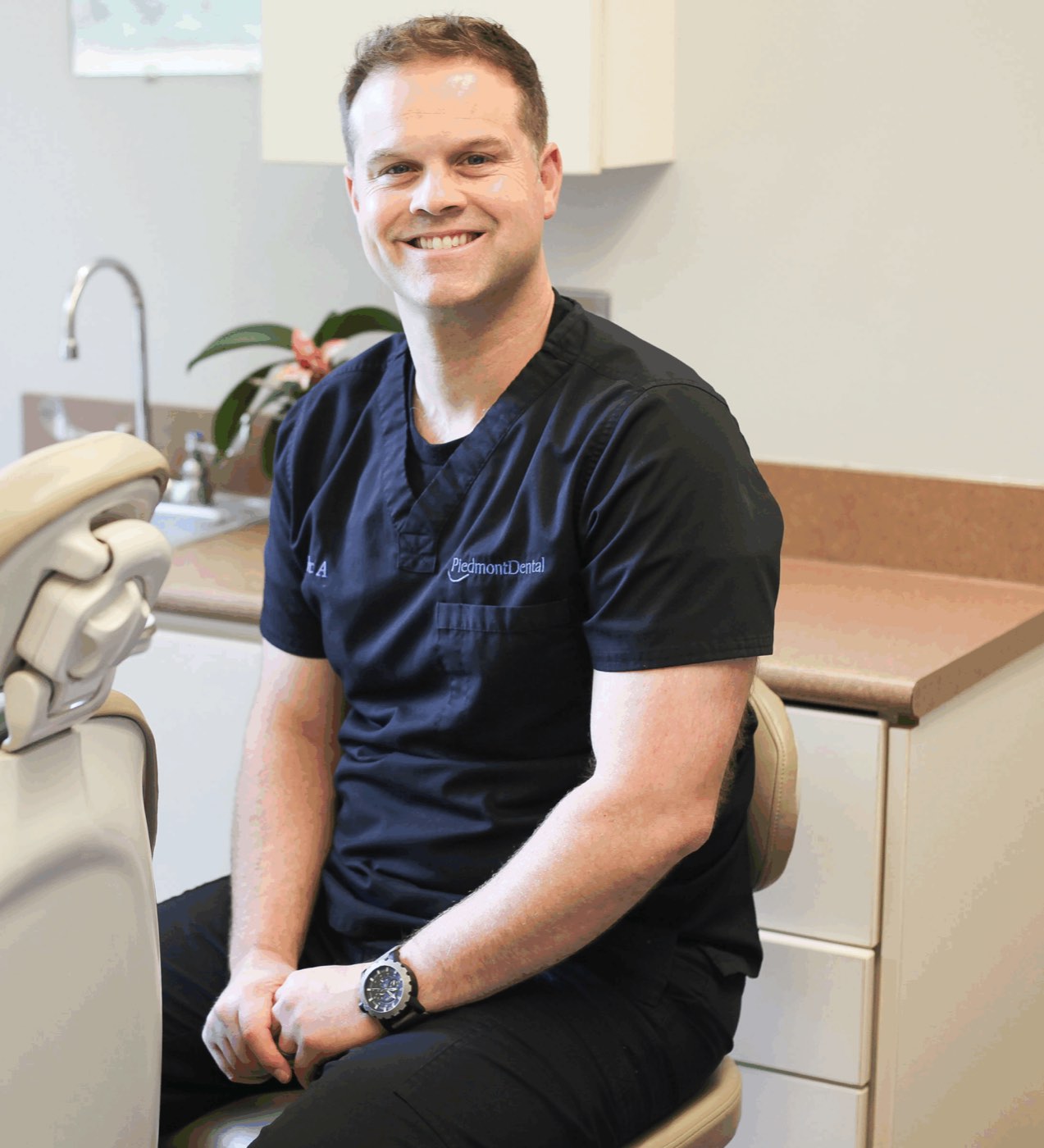
Dr. Ben Areheart at Piedmont Dental
Who does the work

Dr. Ben Areheart, DMD

Dr. Areheart earned his dental degree from the Medical University of South Carolina in 2011, then served as a captain in the U.S. Air Force, where his advanced residency covered crown, bridge, and implant dentistry. He came to Piedmont Dental in 2014 and has treated Rock Hill families here ever since.

That continuity is worth something with a bridge. The dentist who shapes your anchor teeth and cements the final piece is the same one checking on it at every cleaning for years to come, alongside a hygiene team that has been here for decades.

Most patients simply know us as their family dentist. Bridge work is one part of looking after the whole mouth.

MUSC College of Dental Medicine, 2011 U.S. Air Force AEGD residency At Piedmont since 2014
The cost question

What a dental bridge costs

It depends on four things. How many teeth are missing, which bridge design fits, the material it's made from, and the condition of the anchor teeth. An anchor that needs a buildup before it can hold a crown changes the picture, and so does choosing an implant-supported design over a traditional one.

So we don't guess and we don't quote blind. Dr. Areheart examines your mouth, recommends one specific plan, and you get the numbers before anything starts. The recommendation will always match your gap, nothing more.

Will insurance help?

Often, yes, since a bridge is restorative rather than cosmetic. We file almost all insurances if your plan allows out of network providers. Coverage for bridges varies a lot from plan to plan, so our front desk will help with your specific situation.

The other options

Bridge, implant, or partial denture?

A bridge isn't the only way to replace a missing tooth, and it isn't always the best one. A dental implant stands on its own root, so the neighboring teeth stay untouched, though the process takes longer from start to finish. A partial denture costs less up front but comes out at night and never feels quite as solid.

Where a bridge tends to win: the teeth beside the gap already need crowns anyway, or you want a fixed result without surgery. It's also the quicker route, finished in two visits a few weeks apart. Dr. Areheart will lay out all three options with you before you commit to any of them.

Common questions

Dental bridge FAQs

How long does a dental bridge last?

Most bridges last 10 to 15 years, and plenty go longer. The biggest factor is the health of the anchor teeth underneath, which is one reason we look at your bridge at every regular cleaning.

How many appointments does a bridge take?

Usually two. At the first, Dr. Areheart shapes the anchor teeth, takes impressions, and places a temporary bridge to protect everything. A dental lab builds your permanent bridge, and about two to three weeks later you come back to have it fitted, adjusted, and cemented.

Does getting a bridge hurt?

The area is fully numbed, so you shouldn't feel more than pressure during the appointment. Some sensitivity in the anchor teeth for a few days afterward is normal. If dental visits make you anxious, IV sedation is available so you can relax through the procedure.

Should I get a bridge or an implant?

It depends on the gap, the neighboring teeth, and your health history. If the teeth next to the space already need crowns, a bridge can solve two problems at once. If they're healthy and untouched, an implant leaves them alone. Dr. Areheart will walk you through both before you decide anything.

How do I clean under a bridge?

Brush as you normally would, then clean under the replacement tooth once a day with a floss threader or a water flosser. Your hygienist will show you exactly how at your next visit.

Ready to close the gap?

Call the office and tell us what's going on. The front desk will find you a time with Dr. Areheart, and you'll leave your first visit knowing exactly what your bridge involves and what it will cost.

Call (803) 328-3886
1562 Constitution Blvd #101, Rock Hill, SC 29732 · Monday through Thursday, 8:00 AM to 5:00 PM